Information Overload: A Silent Obstacle to Business Decisions


Discover how analysis paralysis and information overload may be affecting decisions in your company, and how simple tools like woku can help you get out of this problem.
Every time a topic goes round in my head, I like to search for keywords in the Google Scholar search engine. I always end up reading some interesting articles that manage to confirm or also discard those ideas that take away my sleep.↑
One thing that bothers me about surveys is that they are not simplistic in information. I have come across surveys with up to 15 questions. A lot of data to look at, a lot of diversity in the analysis, which usually causes anxiety and difficulty focusing.
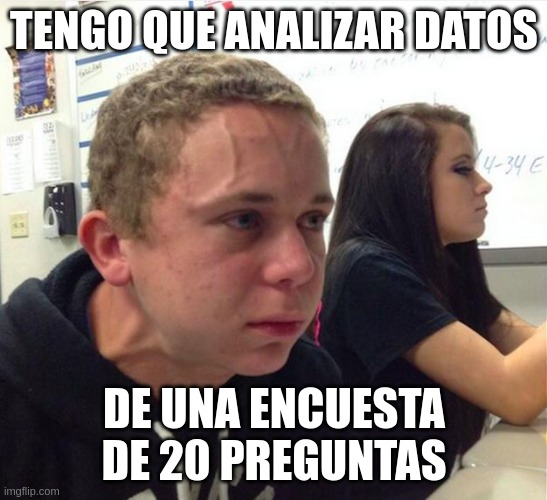
This is why I searched Google Scholar for analysis paralysis and information overload. I found three interesting papers that I want to share in the reflection of this post and how woku seeks to avoid paralysis due to analysis and information overload.
The abundance dilemma
Information overload isn't just a problem of quantity, but of quality and relevance. Recent studies reveal that:
- Impaired discernment: The greater the volume of information, the lower the ability to distinguish what is useful from what is irrelevant. Bawden and Robinson (2009) point out that this can lead to “analysis paralysis”.
- Impact on decision-making: “Analysis paralysis” hinders agile decision-making. Roetzel (2019) found that managers often postpone important decisions due to the overwhelming amount of available data.
- Psychological effects: Stress and job dissatisfaction increase with information overload. Edmunds and Morris (2000) report that employees experience anxiety and frustration when dealing with large volumes of information.
- Decreased productivity: Overload can lead to a significant reduction in productivity. Employees spend more time searching for information than using it effectively'
Surveys: Tool or Trap? ▸
Surveys, while valuable, can become a source of overload:
- Overwhelming volume: They generate massive amounts of data that can be difficult to process. Roetzel (2019) points out that organizations are often “drowned in data, but thirsty for knowledge”.
- Complexity in analysis: They make it difficult to identify key patterns. The variety of answers can lead to conflicting interpretations.
- Delays in action: Delay the implementation of necessary improvements. Edmunds and Morris (2000) indicate that time spent analyzing large data can result in missed opportunities.
Simplicity in the Age of Complexity ÷
Faced with this challenge, woku offers a solution:
- Efficient capture: Simplifies data collection, focusing on essential and relevant information.↑
A woku is comprised of a rating of 1 to 5 stars plus a text or audio review.3,4
- Instant analysis: Provides actionable insights immediately, allowing for a quick response to customer needs.
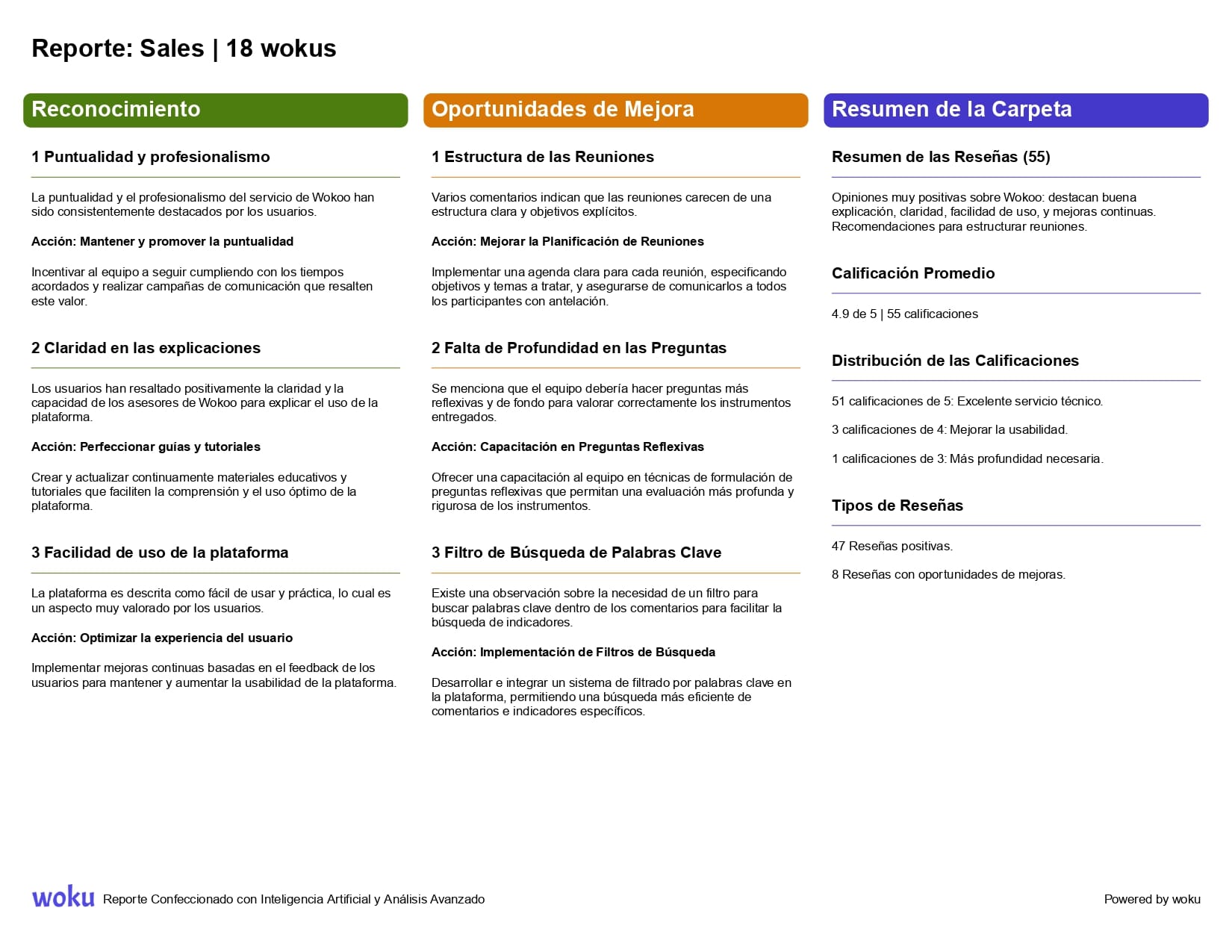
With woku, you can get reports with a single click, due to the simplicity in the data structure.
- Clear visualization: Facilitates decision-making with clear and concise reports, avoiding visual overload.
Each report on woku is one page.↑
Clarity in Chaos
Information overload is a real obstacle, but not an insurmountable one. With tools like woku, companies can:
- Streamline processes: Overcoming paralysis through analysis, allowing for faster and more effective decisions.
- Improve accuracy: Make informed and timely decisions based on relevant and up-to-date data.
- Optimize resources: Focus on improving customer satisfaction and optimizing processes, instead of getting lost in the analysis of excessive data.
- Foster innovation: By freeing up time and cognitive resources, companies can focus on creativity and innovation.
In a world awash with data, the key to business success lies in the ability to extract clarity from chaos. woku positions itself as a crucial tool in this mission, offering a path to simplicity and efficiency in information management.↓
References -
- Bawden, D., & Robinson, L. (2009). The dark side of information: overload, anxiety and other paradoxes and pathologies. Journal of Information Science, 35 (2), 180-191.
- Edmunds, A., & Morris, A. (2000). The problem of information overload in business organizations: a review of the literature. International Journal of Information Management, 20 (1), 17-28.
- Roetzel, P.G. (2019). Information overload in the information age: a review of the literature from business administration, business psychology, and related disciplines with a bibliometric approach and framework development. Business research, 12 (2), 479-522.