What Is Customer Experience Really?

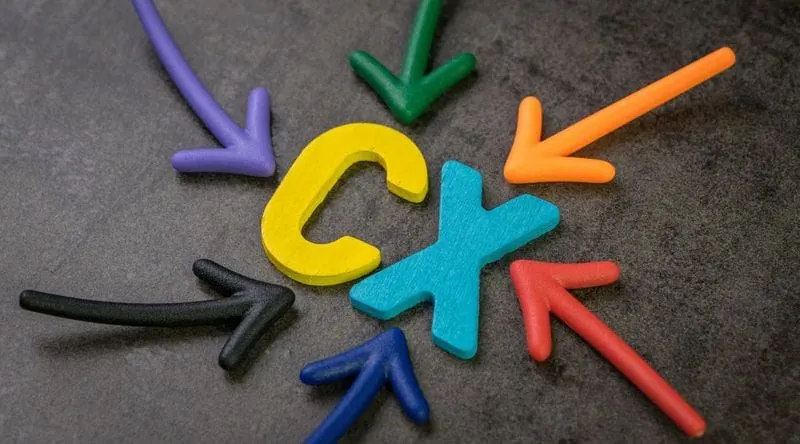
Customer experience (CX) is critical to driving business success. This publication clarifies the concept of customer experience and its implications for the business.
I want to talk to you about something that sometimes gets more complicated than necessary: the famous customer experience, or as the North Americans call it, Customer Experience (CX).
What really defines a good or bad customer experience?
The problem is that there are so many definitions that in the end we end up confused. The good thing is that I found an article that clarifies the picture a lot, so I want to share it with you, but in a simple and direct way, without pompous definitions.
Customer experience is more than just a survey▲
First, let's make one thing clear: customer experience isn't just an evaluation of “how satisfied are you?” It's much more. These are the reactions that people have to any interaction with your brand or product, whether it's good, bad or neutral.
For example, at woku, when a customer uses our tools to leave a text or audio review, we're not just capturing their responses; we're seeing their immediate reactions. The customer experience starts from the first contact, goes through every interaction and ends, well... it never really ends, because customer opinions always evolve.
Not everything is controllable*
Another important point highlighted by the paper is that not everything is under our control. There are a lot of things that customers experience outside of what we can handle. You can have the best product in the world, but if the customer had a bad day or was negatively influenced by their environment, their experience with your brand will be affected.

This doesn't mean that companies can't do anything. On the contrary, we must focus on the “stimuli” that we do control: our customer service, the quality of the product, the design of our interfaces. But beware, we must also be attentive to what is happening beyond our reach and learn from it.
Extraordinary or common?
One thing that made me think is the idea that not all experiences have to be memorable or extraordinary. Sometimes, the customer just wants things to run smoothly. That feeling of “everything went well, no surprises” is also a valid form of a good experience.
At woku, for example, we have realized that many times, rather than surprising our users, what they value is the ease of obtaining useful information quickly. There are no fireworks, only practical results.2,3
Our Role as a Company↑
Finally, something I've always liked about how we handle things at woku is that we don't try to control everything the customer feels. We can't. But we can influence, improve and design key moments that leave a good impression. The key is to monitor and adjust those moments.2,3
We make it easy for companies to listen to their customers quickly and without complications. That, in my opinion, is what really matters when we talk about Customer Experience: to be there, to listen, and to improve with every interaction.
There's no magic formula for improving the customer experience, but we can continue to learn and adjust the course. At woku, we're committed to simplifying the way those experiences are captured and processed, so that you can focus on what really matters: growing your business.
References
- Becker, L., & Jaakkola, E. (2020). Customer experience: fundamental premises and implications for research. Journal of the Academy of Marketing Science, 48, 630-648.