What is Customer Experience?


Discover what customer experience (CX) really is and why it's crucial to your company's success. Learn how a comprehensive approach can transform every interaction into an opportunity to strengthen customer loyalty.
When we launched woku to the market in January 2023, our initial proposal was a software focused on collecting customer reviews with the objective of recognizing workers. In essence, woku was job recognition software. However, in September 2023, after making a pivot, my partner Diego told me that we had now become a customer experience management software.↑
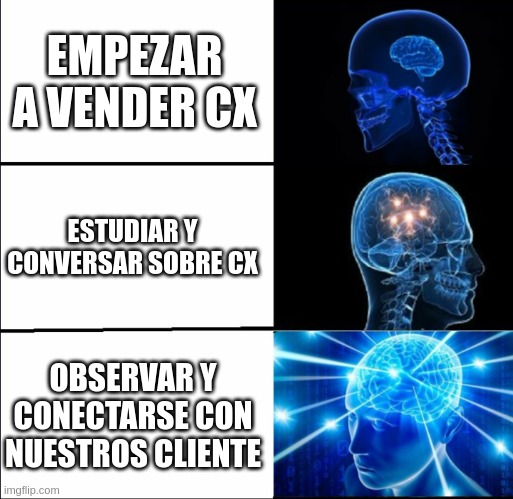
This led me to ask myself: What is customer experience really? As we developed our idea, we had a lot of internal conversations, but it was mainly by observing and connecting with our customers that the concept began to gain clarity.
I know that customer experience can seem like an abstract concept. That's why I want to explain this concept based on an article in the Harvard Business Review entitled “Understanding Customer Experience.”
The customer experience is a complete journey
To understand what customer experience is, we must first understand that customers start a journey every time they interact with a brand or use its products. The customer experience encompasses every aspect of this interaction, from the first advertisement they see, to daily use of the product and any service interaction. It is the internal and subjective response that customers have to any direct or indirect contact with the company, including unforeseen encounters such as word-of-mouth recommendations or online critiques.
To improve the customer experience, it's not enough to measure satisfaction. Satisfaction is simply the end result, the balance between positive and negative experiences. Improving this satisfaction involves understanding every touchpoint, every interaction the customer has with the company, and making sure that all those interactions meet or exceed customer expectations.
Every experience is different between companies and customers↓
As woku grew, we began serving customers from various sectors who wanted to manage the customer experience using our tool. It was in this process that we realized that customer journeys vary significantly by industry. For example, while a consulting firm that operates in the physical world usually starts the customer journey through word-of-mouth recommendations, a marketplace will likely see that its customers begin their journey based on a publication or recommendation on social networks. In addition, in startups, customer service is generally provided through chats or emails, while in the educational environment, such as in universities, the interaction is mainly face-to-face.
Connecting with our customers and being in the field has provided us with a broader view of what customer experience means. We have learned that these trips not only vary between different types of companies, but also between individuals. Each person, with their unique interests and context, can choose a different trip than most customers. For example, in a food company, older customers prefer to call the establishment directly to place their order, while younger customers choose to use apps to place the order, completing their purchase without any personal contact.
Why do companies fail to improve the customer experience?
The answer is simple: the customer experience, involving all aspects of the company, is a complex construct, and improving it can be a titanic task. A study revealed that only 8% of customers describe their experience as “superior”, while 80% of companies believe they are providing a superior experience. This disconnect is often due to companies focusing on what they believe is important to customers, without really listening to or understanding their needs and desires.
Some companies are stuck in a data collection cycle without taking action, collecting customer reviews but not holding anyone responsible for using that information to improve. In addition, millions are often invested in customer relationship management (CRM) systems, which focus on what the company knows about the customer, rather than customer experience management (CEM) systems, which capture what customers think and feel about the company.
Mapping the Experience÷
To truly capture and improve the customer experience, companies must adopt a continuous monitoring approach in three dimensions: past, present, and potential patterns.
- Past Patterns: These reflect recent customer experiences, helping companies improve specific transactions and identify emerging problems. They can be monitored through automated surveys after each important interaction, such as the installation of a product or a service call.
- Present Patterns: Focus on current relationships and identify future opportunities. They require more in-depth and frequent monitoring, evaluating how customers perceive their ongoing relationship with the company and what improvements can be made to maintain and strengthen that relationship.
- Potential Patterns: This approach explores new opportunities through ethnographic studies or focus groups, evaluating how the company can meet future customer needs or innovate in its product and service offerings.
Customer experience is a strategic prioritization
For a company to thrive in a customer-centric market, it must go beyond simply meeting the basic needs of its customers. You need to deeply understand their experiences and emotions, and to respond proactively. This requires a commitment from the top management to establish customer experience as a strategic priority, ensuring that all departments, not just sales or customer service, are aligned and committed to this mission.
When every function within the company cares about and contributes to the customer experience, a positive cycle of feedback and continuous improvement is created. At the end of the day, it's not just about knowing what customers think of you, but about using that knowledge to transform every interaction into an opportunity to delight and strengthen customer loyalty.
References ÷
- Meyer, C., & Schwager, A. (2007). Understanding customer experience. Harvard business review, 85 (2), 116. Retrieved from https://hbr.org/2007/02/understanding-customer-experience