Why Don't Your Surveys Always Reflect Reality?


Find out why surveys don't always reflect reality. Learn how cognitive effort affects your customers' responses and how to avoid errors in data collection with more effective solutions.
Surveys have been a fundamental tool for measuring opinions and attitudes, but have you ever wondered why the results sometimes don't seem to match reality? A classic article by Krosnick (1991) revealed something that few stop to consider: not all survey responses are optimized by respondents. This means that, many times, people do not strive to give the best possible answer, but rather they give an answer “good” enough to allow them to move forward. Why is this happening? Here's what we'll explain to you and how it can affect your customer experience.
The Cognitive Effort Dilemma
Krosnick calls it satisficing, a concept that implies that, when answering requires too much mental effort, some respondents simply choose the first option that seems reasonable or even choose to say “I don't know”. Sometimes this is due to the complexity of the questions or the simple fact that the person loses motivation as they progress through the survey. Picture it: you start with enthusiasm, but when you get to the tenth question, your mental energy diminishes and the answers start to lose quality'.
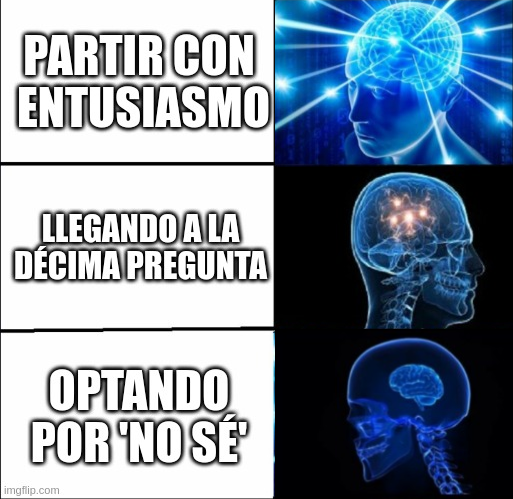
This phenomenon is more common when surveys are lengthy, when questions are difficult, or when respondents are not particularly motivated. At woku, we've seen how respondent fatigue can directly influence data quality.
How is satisficing manifested?
Krosnick mentions several ways that satisficing can influence responses:
- Choosing the first reasonable option: Instead of analyzing all the alternatives, the respondent selects the first one that seems appropriate.
- Acquiescence: The respondent tends to agree with statements without questioning them.
- Maintain the status quo: On controversial issues, many prefer not to choose drastic change and choose to keep things as they are.
- Non-differentiation: If a survey uses rating scales, such as 1 to 5, some respondents may rate all items with the same score, to finish faster.
- Say “I don't know”: Instead of trying hard to remember or think of an answer, they simply choose not to answer.
How does this affect your business?
When you analyze the results of a survey, you probably think that you have solid data on which you can base important decisions. However, satisficing can distort reality, and the data obtained may not reflect the true attitudes or perceptions of your customers.3,4
This behavior is especially relevant for companies that base strategic decisions on surveys. If you don't recognize the signs of biased or incomplete data, you could be making decisions based on information that isn't completely accurate.
How can woku help you?
At woku, we specialize in making it as simple and effective as possible to capture and analyze customer reviews. We know that time and effort are limited resources, both for you and for your customers. Our platform does not use surveys to understand your customers and processes data instantly, removing obstacles that lead to practices such as satisfaction.
Woku's advanced technology helps you:
- Eliminating questions for moments of truth and capturing opinion with a free field. By focusing on the moments most relevant to customers, we eliminate the need for lengthy surveys and capture their opinion directly through open fields.
- Providing instant, actionable reviews, without relying on lengthy surveys that tire your customers.
Instead of getting answers that simply “satisfy”, with woku you can ensure that you receive authentic and accurate information, allowing you to make better informed decisions.
The Next Step Towards Smarter Decisions↓
The key isn't just asking the right questions, but how you ask your customers. Reducing cognitive effort can make the difference between obtaining useful data and superficial answers. If your company is looking for more effective ways to understand your customers and improve their experience, it's time for you to dare to listen with woku.
References
- Krosnick, Jon A. Response strategies for coping with the cognitive demands of attitude measures in surveys. Applied cognitive psychology 5.3 (1991): 213-236.