The Evolution of NPS and Why We Decided to Integrate It into Woku

Learn how woku integrates the Net Promoter Score (NPS) to enhance the customer experience and improve loyalty. Learn why NPS is a key complement to our feedback tools.
In the world of customer experience management, the Net Promoter Score (NPS) has gained a prominent place. However, at woku, we were skeptical until a customer requested it, giving well-founded reasons.
This concept, introduced by Frederick Reichheld in an article in the Harvard Business Review, is based on a simple question: “How likely are you to recommend [company name] to a friend or colleague?” On a scale of 0 to 10, customers respond, and these responses are grouped into “promoters” (9-10), “passives” (7-8) and “detractors” (0-6). The difference between the percentage of promoters and detractors becomes the company's NPS.
Reichheld argues that this single number can predict business growth better than any other customer satisfaction metric. The simplicity of NPS and its apparent ability to correlate with financial success have made it a popular tool in many organizations. However, its adoption has not been without criticism. Research and studies have questioned its effectiveness as the only indicator of customer loyalty and have underscored the importance of evaluating the conceptual basis of this approach.
Growing around the customer experience*
Sustainable and significant business growth is achieved when attention is paid to the entire customer experience, not just through a single metric. While NPS is useful for capturing an overview of customer loyalty, a comprehensive approach involves understanding customer interactions at every touchpoint. Not only does this approach improve satisfaction and loyalty, but it also boosts word-of-mouth marketing, improves products and services, and reinforces long-term relationships with customers.3,4
Our decision to integrate NPS into woku
On August 8, our customer Inchalam asked us an interesting question: could we, in addition to using woku to measure the experience at specific times of their services and products, include an NPS metric? Our initial reaction was one of resistance, as we preferred to focus exclusively on our wokus methodology. However, after analyzing and studying critiques of the NPS, and understanding its purpose and origin, we concluded that it could be a valuable tool to complement the information that woku already provides.
Wokus are ideal for deepening continuous improvement, capturing detailed feedback on different aspects of the customer experience. But including the NPS question at the end of the feedback process captures an additional dimension: the willingness of customers to recommend the company. This is a widely accepted metric in customer experience management and, after analyzing more than 7,000 reviews that we have processed, we noticed that none explicitly mentioned something like “I recommend them”. This was our moment of discovery: the NPS has a place in woku.
Implementing NPS in woku003
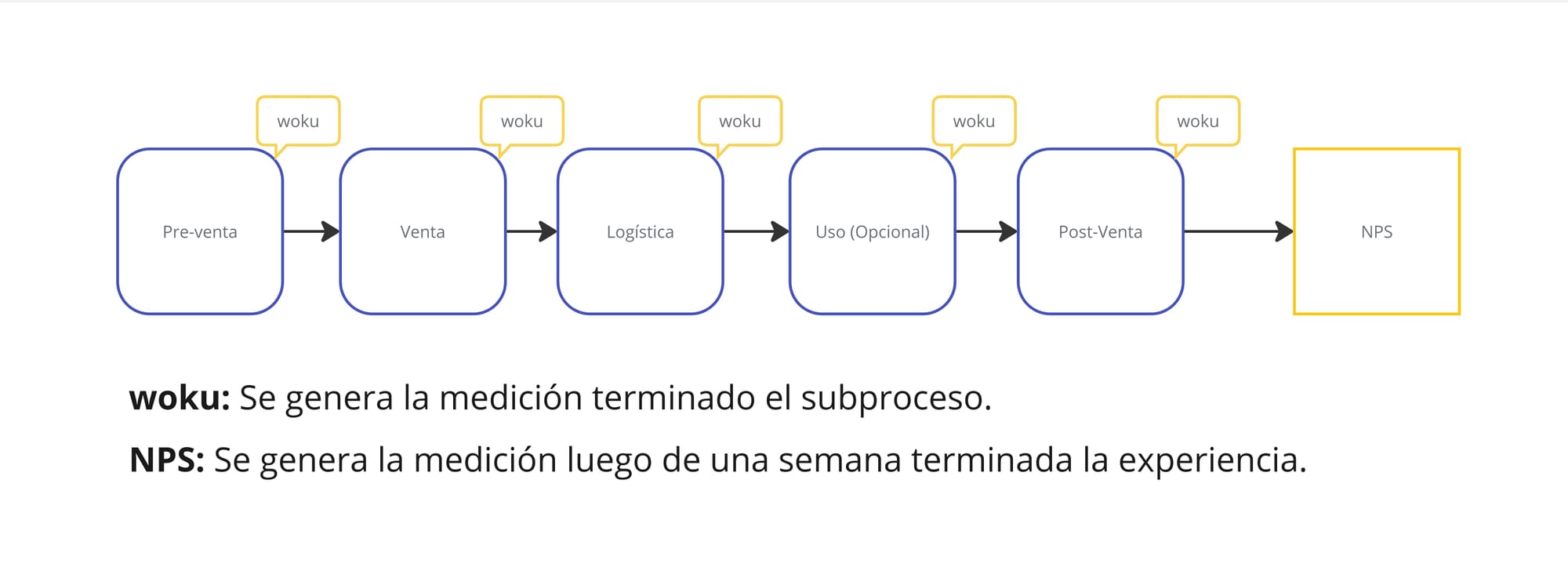
On Monday, the 12th of this month, we met with Inchalam and informed them of our decision to launch a closed beta that would be available on the 21st of this month to include NPS in our system. The basic flow for Inchalam is like this: a woku is implemented in each process to capture detailed feedback, and then complemented by an NPS question. This strategy of combining wokus throughout the process with a final NPS, instead of conducting an extensive one-time survey at the end of the experience, has the potential to improve response rates, something that we will be validating in the coming months.
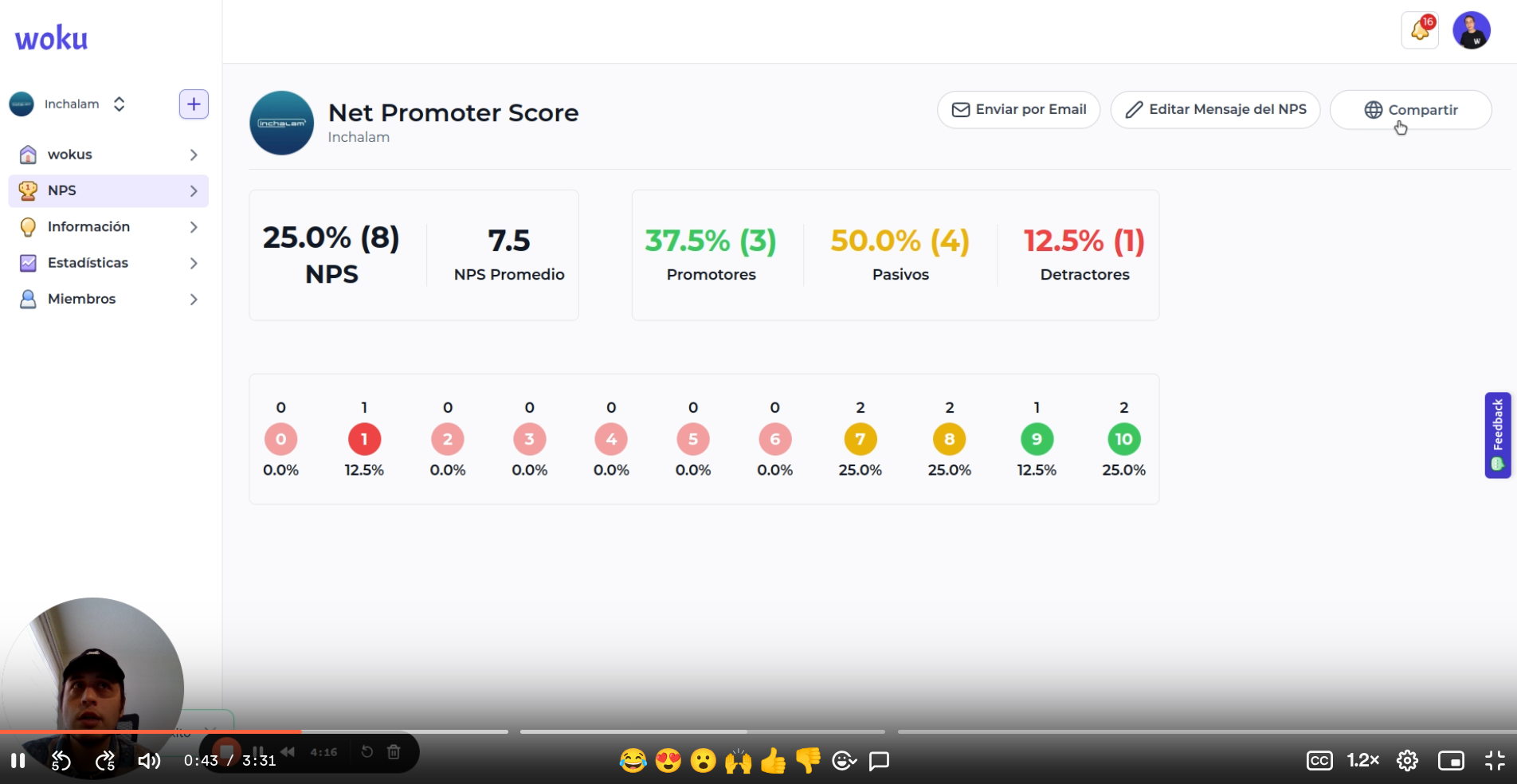
◆ In the first version of NPS, we allowed users to edit the message, send mass emails and share a link. We finished developing this version on the 21st, sent a Loom video to Inchalam, and received their approval. Paula, my partner, with her commercial approach, selected three of our most active companies to participate in this closed beta. All three of them accepted, although two of them needed to create more than one NPS due to their different business units.
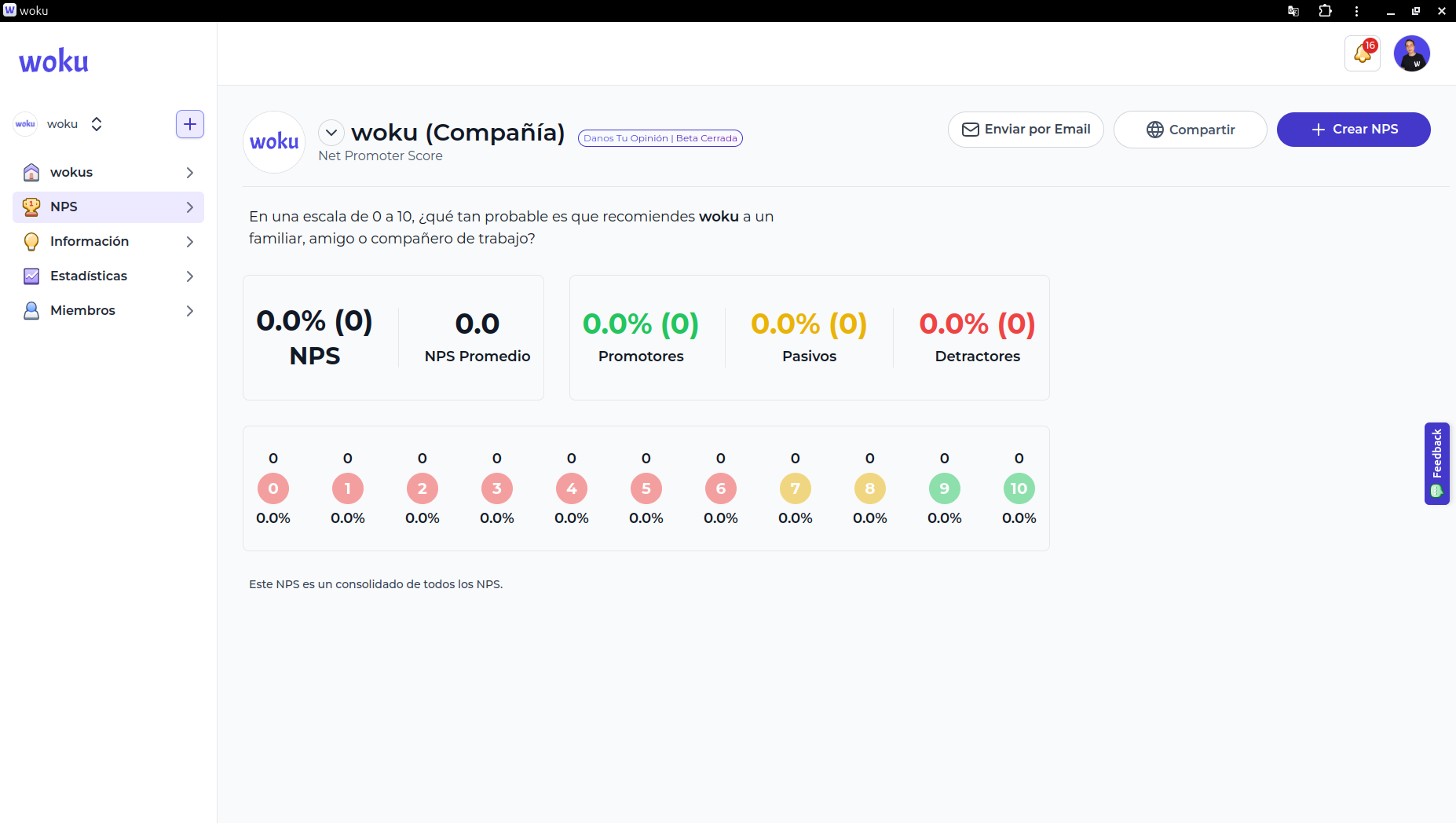
This led us to reflect on whether a single NPS at the company level was sufficient or if it was necessary to allow multiple NPS. Understanding that some organizations, such as the Faculty of Engineering of the University of Concepción (FI UdeC), have independent departments, we decided to adapt our business logic to allow the creation of multiple NPS, consolidating all of the results at the company level.
Listen to the customer to improve*
The changes were implemented quickly, and by Monday our closed beta customers can now use this new feature with their specific requirements. This process has reaffirmed to us the importance of listening to our customers, since they themselves can provide crucial discoveries to strengthen our product.
3,4 3,4 In future posts, I'll share the results of this closed beta and how we're turning woku into a complete tool for managing the customer experience, but without losing the simplicity and ease of use as our guidelines.
References
- Reichheld, F.F. (2003). The one number you need to grow. Harvard Business Review. Retrieved from https://hbr.org/2003/12/the-one-number-you-need-to-grow