Step-by-Step Guide to Creating a Customer Journey Map


Learn how to do effective Customer Journey Mapping with this step-by-step guide. Learn to better understand your customers and improve their experience to increase satisfaction and loyalty, optimizing every key interaction with your brand.
Creating a Customer Journey Map (CJM) is a powerful tool for understanding and improving your customer experience. This guide will take you through the steps necessary to build an effective CJM, using simple and close language, perfect for any company that wants to put itself in the shoes of its clients.
Step 1: Establish the scope of the project÷
Before starting to draw, it is essential to clearly define the scope of the project. Ask yourself:
- Who? : Identify the customer or person for whom you are creating the map. For example, a repeat customer who buys online or a new user exploring your platform.
- What? : Determine the action or task you want to map. It can range from a purchase to a subscription to a service.
- Where? : Define the channels where this interaction occurs (web, mobile, physical store).
- When? : Set the time of the tour, such as during the first use of the product or when contacting customer service.
Step 2: Internal Research*
Gather data that already exists within your organization. This could include website analysis, call logs, social media posts, and operational data. This information will give you a solid foundation on how customers are currently interacting with your business.
Step 3: Map the current state of the customer journey÷
Involve teams that interact with customers and that participate in the experience you're mapping. It's essential to get a comprehensive view of how the customer experience is currently perceived.↑
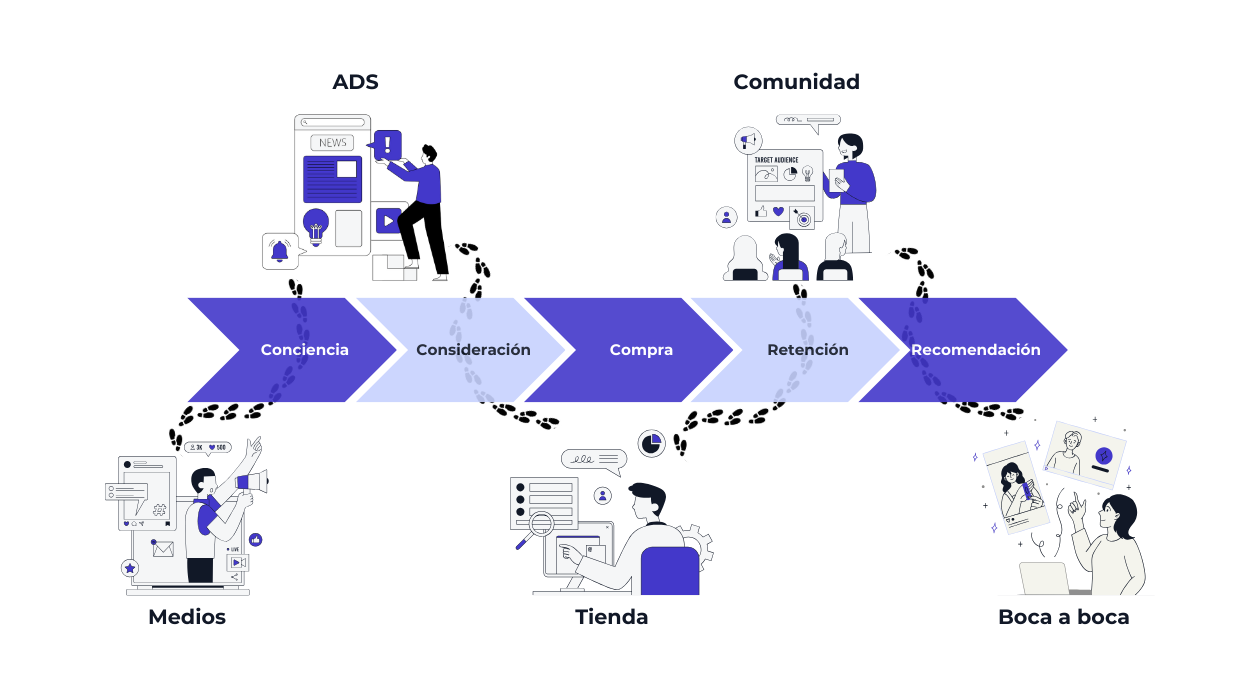
To map the customer experience, use templates (in Miro, there are excellent templates) or create your own diagram, the experience starts from when your potential customers hear about your company until they buy back or recommend you, it's the whole trip.
Step 4: Develop and document your hypothesis*
Define what parts of the experience work well and where they break. It identifies the “moments of truth”, that is, the key points where the customer decides whether or not to continue with their experience.
Step 5: Research with customers÷
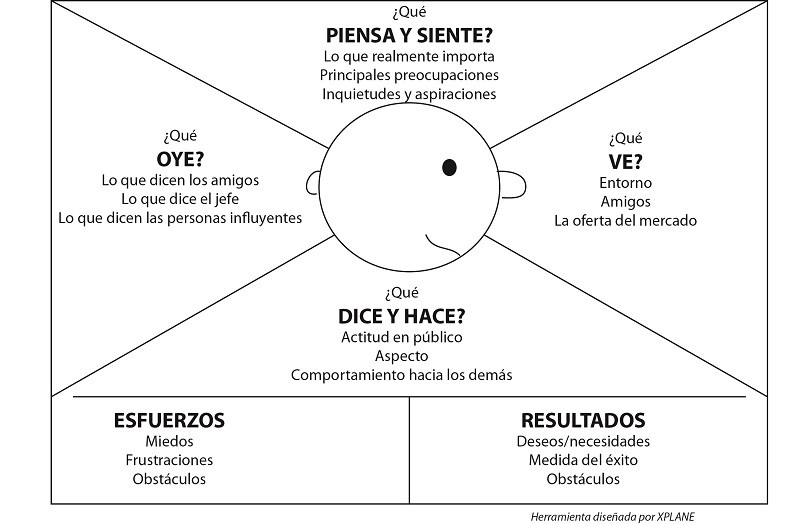
Conduct direct investigations with your customers. Ask participants to describe in their own words the steps they follow to complete the mapped task. Pay attention to the verbs they use (“to do”, “to feel”, “to think”) as they offer clues about their emotions and perceptions.
To process the data you can create empathy maps, they are perfect for finding discoveries about what is most important to your customers.
Step 6: Revise the journey÷
Compare your findings with current strategy and customer expectations. It identifies perception gaps and trains teams that interact with customers on the challenges discovered. Make sure that your map includes responsibilities and metrics to measure results.÷
Step 7: Improve the Journey
Implement the necessary changes to solve the problems identified. Communicate these improvements to all teams involved and measure changes in customer behaviors. Share the results and learnings so that everyone in the company can identify with the customer and contribute to the experience.÷
The CJM changes over time
A Customer Journey Map isn't just a drawing on paper; it's a dynamic tool that must be used continuously to adapt and improve the customer experience. By following these steps, not only will you be able to better understand your customers, but you can also anticipate their needs, thus creating a stronger and more lasting relationship. Start mapping today and take your business to the next level!
References ÷
- SAP Signavio (2022). A comprehensive guide to customer journey mapping: Why understanding your customers is key to success. SAP Sigavio Solutions.