Is the Net Promoter Score (NPS) Really the Metric We Need?

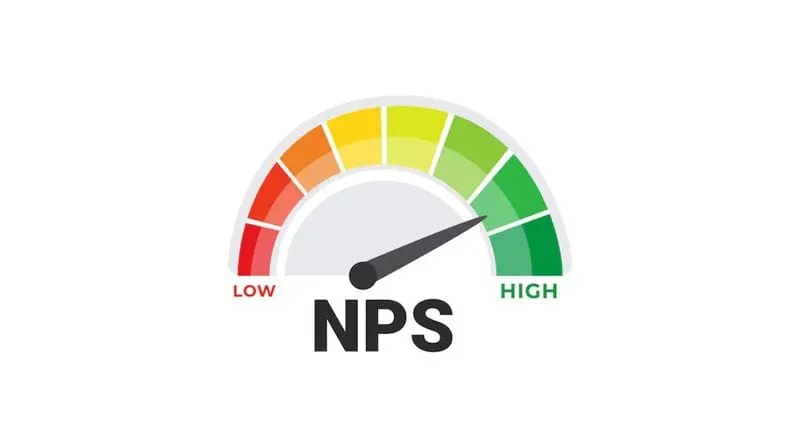
Discover our perspective on NPS and how at woku we are integrating it to offer a comprehensive solution for customer experience management, with scalable development that simplifies the collection of quantitative and qualitative metrics.
The Net Promoter Score (NPS) has been widely adopted in all types of industries as a key metric for measuring customer loyalty. Its simplicity and focus on a single question have captivated many, promising a quick and direct way to understand customer satisfaction and predict business growth. However, despite its popularity, NPS is not without its criticisms and limitations that are important to consider, especially if what we are looking for is deep understanding and continuous improvement in the customer experience.
At woku, we're exploring the possibility of implementing NPS at a company level, but we're doing so with a critical and thoughtful look at its strengths and weaknesses.
What is NPS?
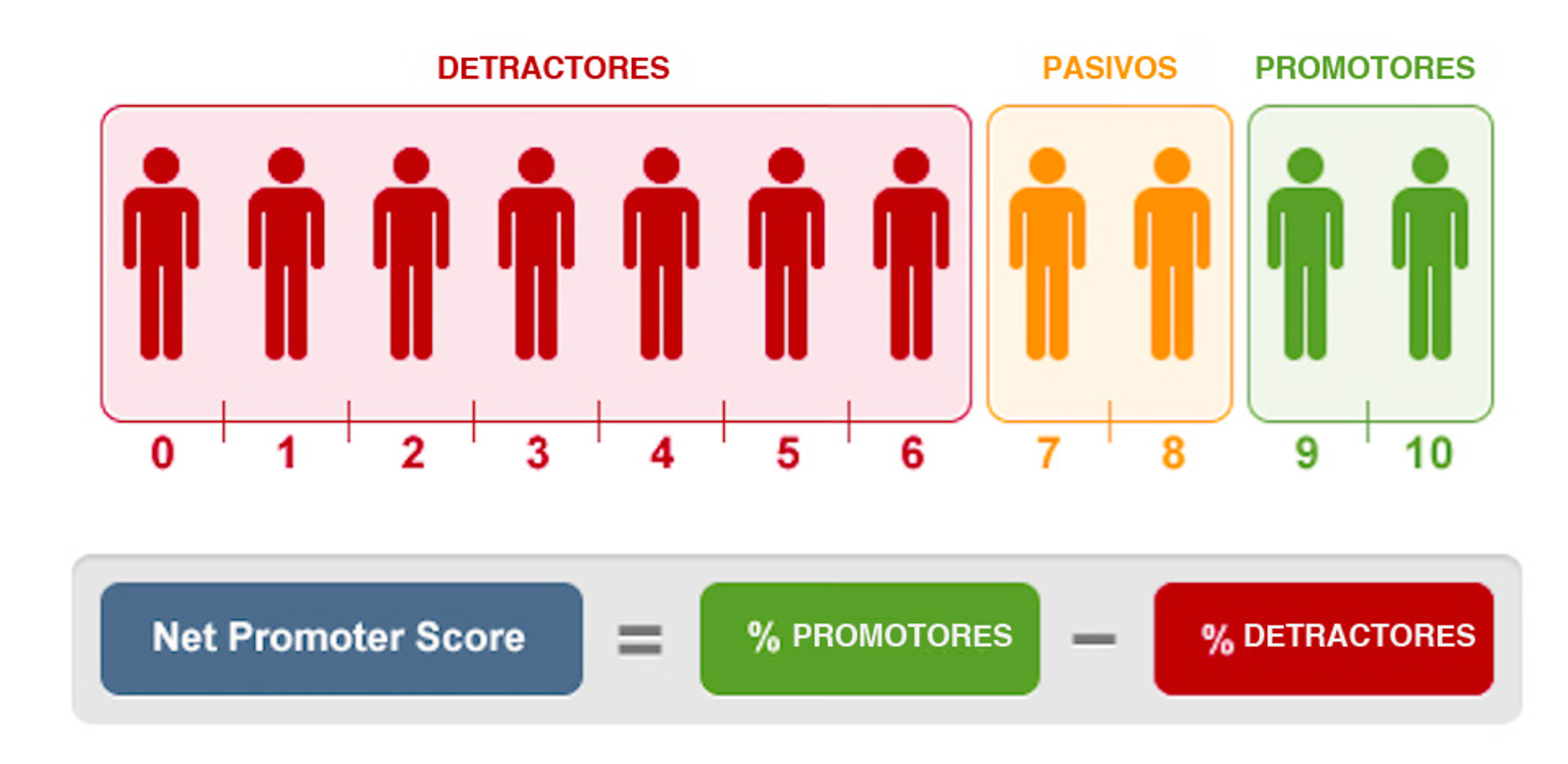
The NPS is a question that is answered from 0 to 10. With 0 unlikely and 10 very likely. The question:
How likely are you to recommend us on a scale of 0 to 10? ─
NPS: Is one metric good enough?
The NPS has been praised for its ability to divide customers into promoters, liabilities and detractors, providing a clear and actionable vision for companies. However, studies and critical reviews have pointed out that this metric can be too simplistic, leaving aside key aspects such as the competitive context, the reasons behind loyalty or lack of it, and the diversity of customer experiences.
“At woku, we believe that NPS can be a valuable tool, but it shouldn't be the only one. Our platform specializes in capturing critical moments and processes in the customer relationship, providing a qualitative and deep understanding that NPS alone cannot provide.
A tailor-made development with Inchalam÷
At woku, we have started a tailor-made development for Inchalam, a key customer in the industrial sector, with the objective of integrating NPS into woku, since it is a measure they use to manage the customer experience. This development has a high scalability potential and could become a standard feature that benefits all of our customers.
Our purpose is to simplify customer experience management, eliminating the need to use two different software (one for the NPS and one for the wokus). With woku, companies will be able to manage a company-level NPS as a quantitative metric and with wokus, they will be able to promote continuous improvement and obtain a deep understanding of their customers through qualitative metrics in their different processes and moments with customers.
Towards a new feature in woku÷
The success of this development with Inchalam could result in a new feature within woku, which fully integrates NPS with our current tools. Not only would this simplify the customer experience management process, but it would also encourage more companies to adopt our value proposition.
By being able to analyze both direct customer responses and the qualitative context of their experiences, companies will be able to more accurately identify areas for improvement and opportunities to strengthen customer loyalty.
What's next for woku†
NPS can be a powerful tool when used properly, but it shouldn't be seen as a one-size-fits-all solution. At woku, we are committed to continuous improvement and deep customer understanding, and we believe that combining NPS with our current capabilities will offer companies a real competitive advantage.
We'll be keeping an eye on the results of this development with Inchalam and look forward to sharing more about this exciting evolution in woku very soon.
References†
- Fisher, N.I., & Kordupleski, R.E. (2019). Good and bad market research: A critical review of Net Promoter Score. Applied Stochastic Models in Business and Industry, 35 (1), 138-151.
- Owen, R. (2019). Net promoter score and its successful application. Marketing wisdom, 17-29.