6 Recommendations for Creating a Customer Journey Map That Actually Works

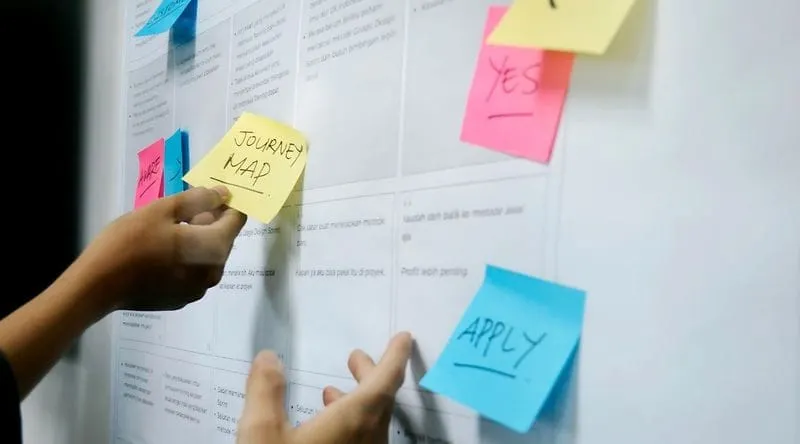
Explore recommendations for effective Customer Journey Mapping and discover how to better understand your customer experience. Learn to identify key touchpoints, use real data and encourage innovation to improve every stage of the customer journey.
Have you ever wondered what your customers experience when interacting with your company? Understanding that experience is key to improving your services, and a super useful tool to achieve this is the Customer Journey Map. But how do you create one that's actually useful and doesn't just look pretty on paper? Here's what we'll tell you about it.3,4
1. Avoid confusion: Not all touch points are the same¹
When we start thinking about the points of contact that a customer has with our brand, it's easy to fall into the trap of thinking that they are all equally important. The truth is that not all customers go through the same points, and some carry more weight than others in the overall experience. Imagine that you are planning a trip: there are stops that are only for changing planes, and others where you enjoy the city and its food. The same is true in the customer journey!
2. Identify key moments: Choose your battles*
Start by identifying the most relevant touchpoints at three stages of the customer journey: before, during and after the service. Ask your customers what those moments really matter to them. It's not about filling your map with all the possible touchpoints, but rather highlighting those that have a significant impact. For example, for a shopping mall, it may be more important to know how customers feel when they search for parking or when they interact with promotions, rather than all the commercials they see.
3. Make it real: Based on data, not assumptions
A good customer journey map is built with real data. How can you get them? Ask your customers directly about their experience. You can use surveys, interviews, or simply observe their behaviors. The key is to listen and understand what points of contact are really important to them and how they live them. Don't imagine what you think they're doing; find out what they actually do.÷

4. Think big: Connect departments and functions3,4
The customer journey map isn't just a beautiful drawing to hang on the wall; it should be a tool that connects all of your equipment. Make sure that each touchpoint is supported by specific actions from different departments: marketing, customer service, operations and technology. This way, each team will know what role it plays in improving the customer experience.÷
5. Constant innovation: Improves the experience at every touchpoint
A good CJM isn't static. It must evolve over time and adapt to new customer needs. Use the map to identify innovation opportunities at each touchpoint. Ask yourself: How can we make this experience even better? Maybe it's offering free Wi-Fi in a mall or ensuring that promotions are easy to understand and use. Small changes can have a big impact.3,4
A more pleasant trip for your customers
Creating a customer journey map isn't just a management exercise; it's a way to put yourself in your customers' shoes and understand how you can improve their experience with your brand. Remember, it's not about including everything, but about focusing on what really matters and doing it right. At the end of the day, a happy customer is a loyal customer, and that translates into growth for your business.
References 3,4
- Rosenbaum, M.S., Otalora, M.L., & Ramírez, G.C. (2016). How to create a realistic customer journey map. Business Horizons, 60 (1), 143-150.