Your customers are already talking. The problem is what happens next

Many companies don't need to ask for more reviews. They need to listen at the right time, understand what those signals say, and get them to the people who can change something.
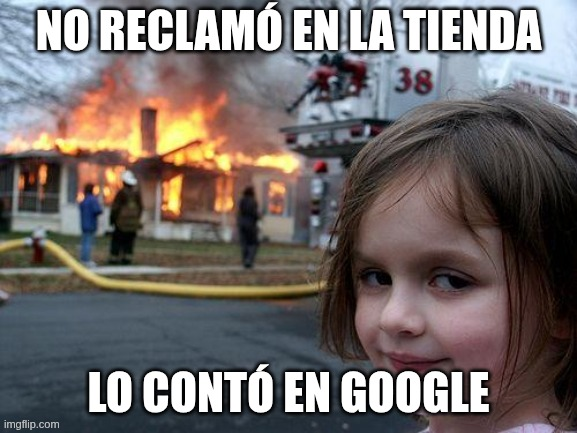
Some time ago, a customer from Colombia told us what led him to use woku. A customer had a bad experience at one of her stores. He didn't say anything at the store or contact the company. He left and left a bad rating on the Google profile.
But it didn't end there. Annoyed with what had happened, she asked her close circle to also leave bad ratings on Google. An experience that the company failed to learn about became a visible problem for anyone looking for the brand.
Imagine what a single bad experience can do to a brand when the customer can't find a direct way to be heard. In addition, according to (Gallo, 2014), acquiring a new customer can cost up to 25 times more than keeping a current one. It's too big a difference to know when the relationship has already broken up.
When feedback comes late and without context
The experience is built when the customer buys, receives the product, needs help and decides to return. If we wait until the end to ask everything, part of that experience has already cooled down. And a number alone doesn't explain what went wrong. Was it the delivery, the product, or the way someone served?
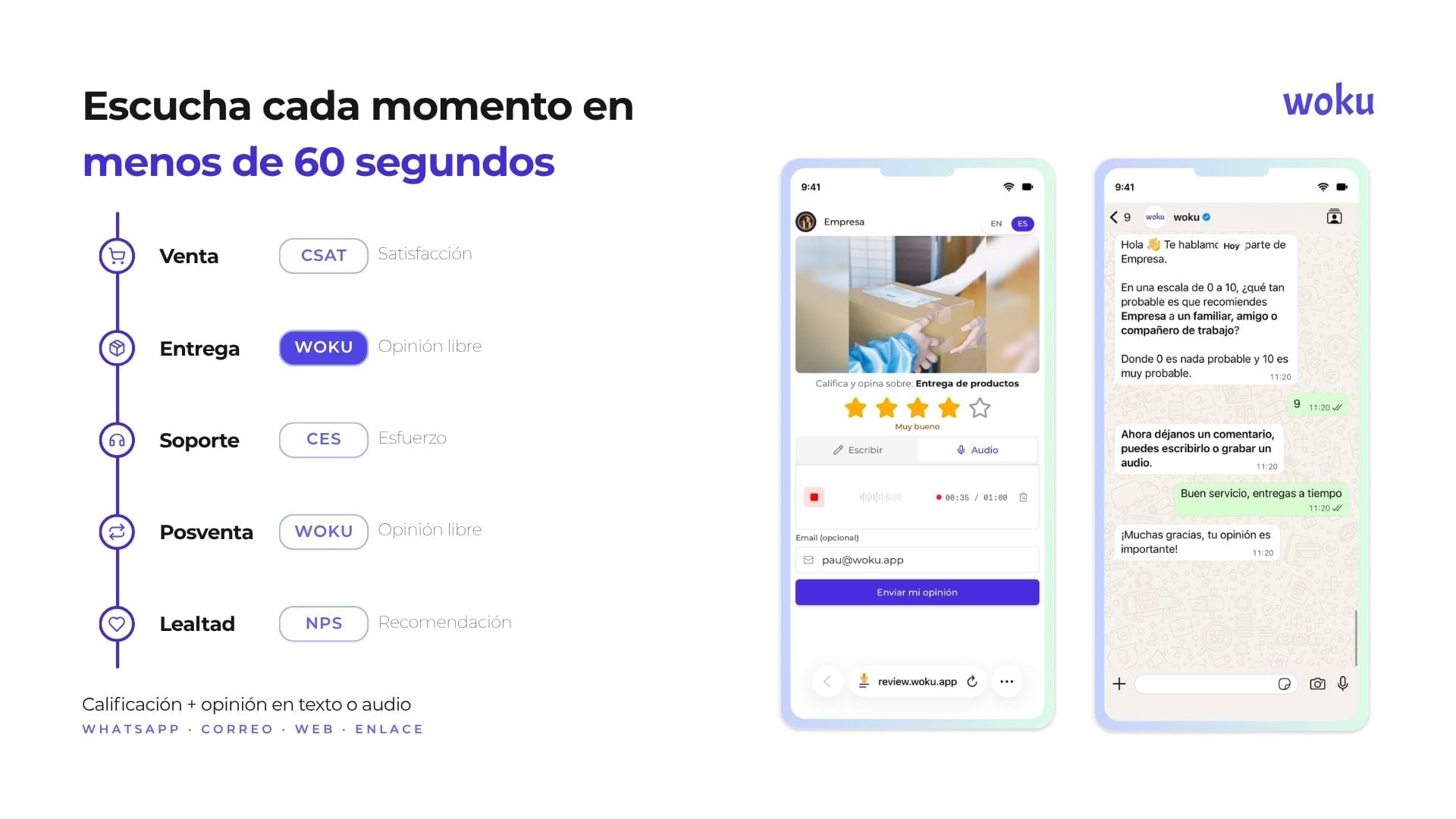
The first thing, then, is to ask yourself what you want to know. Satisfaction can matter in a sale and that's why it makes sense to use CSAT. In a SAC process, it can matter how much effort the customer made to solve their problem, and that's where CES works. At the end of the trip, NPS helps measure loyalty through the intention to recommend.
But there are times when several things can matter. In an office, for example, there are the punctuality and the condition of the product. After sales, quality, durability, design or something you never thought to ask about may appear. There, a woku combines a rating with an open opinion so that the customer can tell, in text or audio, what was relevant to him.
They are examples, not rules. A woku can also make sense in a sale if you're looking for a free opinion. It all depends on what you want to understand. The important thing is not to enter an eternal survey, but to ask simple questions that are answered in less than 60 seconds.
Listening is only half
If the customer had told the company directly about what happened, there would have been an opportunity to take charge before the problem appeared on Google. That situation needs individual attention. But when a similar comment appears many times, it ceases to be an isolated case. There someone has to look at the process and change it.
That's where woku connects listening to action. When an identified negative review needs attention, you can prepare a ticket with the customer's comment, context, and history to reach the right team. When several opportunities for improvement accumulate in the same area, you can gather evidence and create a draft plan for the team to review.
AI helps to read, sort and find what is being repeated. People are still doing what's most important: deciding and acting.
There are problems that need deeper investigation. woku is made to hear what's happening every day, when there's still time to do something useful.
And yes, measuring matters. But measuring without acting is of little use. The question is if that opinion is going to arrive on time and what are you going to do when it does.
References
Gallo, A. (2014, October 29). The value of keeping the right customers.
Harvard Business Review. https://hbr.org/2014/10/the-value-of-keeping-the-right-customers