Asking for Your Customer's Opinion Right Now Is Key to Customer Loyalty

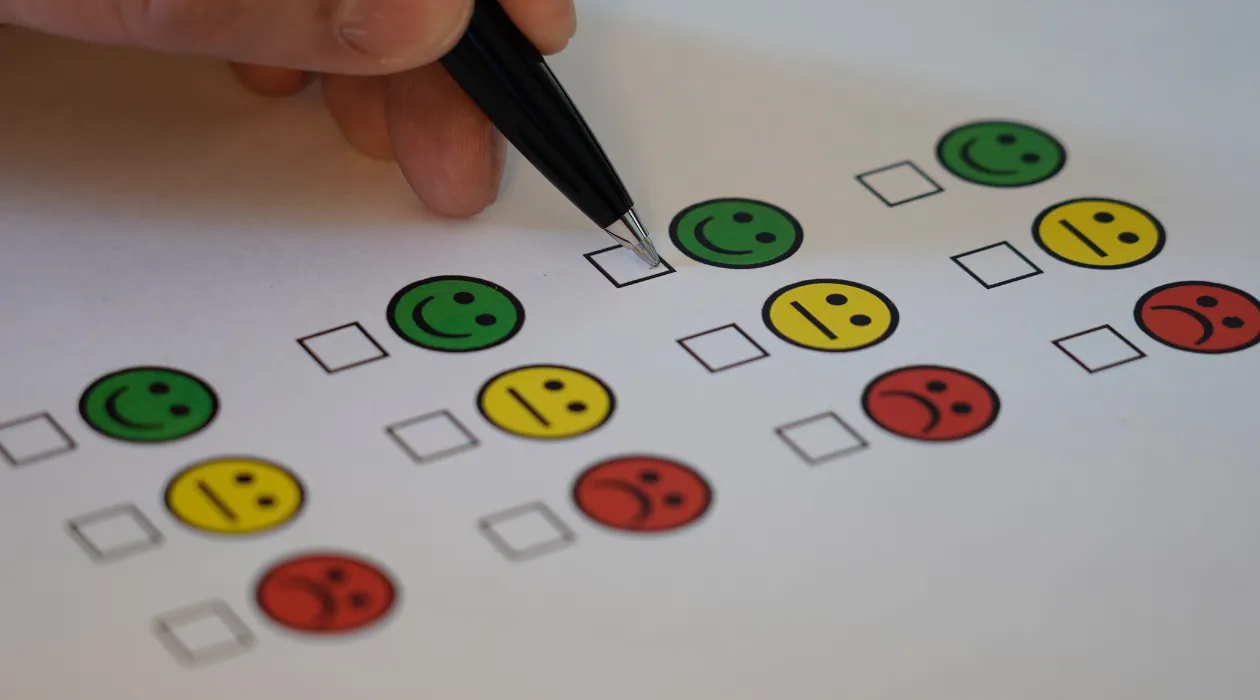
This publication explores the importance of capturing customer feedback in the moment for customer loyalty.
Have you ever wondered why some companies insist so much on you giving them your opinion right after using their service?
This week, Paula told me that a customer asked her this same question about our woku tool. We started to reflect together and I want to share with you what we discovered.
↻ Get ready for a journey into the fascinating world of customer emotions and experiences!
The Customer Experience: A Cocktail of Perceptions and Emotions*
Imagine that you've just tried a new restaurant. Your experience doesn't just depend on how the food tastes, but on a whole range of factors: the environment, the service, even your mood that day. This is how the customer experience works with any product or service. It's a mix of:
- Prior knowledge
- Cognitive analysis of the moment
- And most importantly (and volatile!) : the emotions you're feeling at that instant*
Emotions: shooting stars in our experience
Here's the interesting thing: emotions are like fireworks in our brain. They shine brightly but fade in seconds or minutes. Do you remember exactly how you felt two days ago when you were served coffee? Probably not, and it's not your fault. Our brain simply isn't designed to precisely store those emotional flashes.
The Power of Affect: When Emotions Accumulate
Now, imagine that every time you go to a store, the seller is rude to you. Over time, just seeing the logo of that store will put you in a bad mood. That's negative affect in action. Now let's look at some examples of negative and positive affect.3,4
Negative affect
Think of Maria, who repeatedly hires an appliance repair company. Every time, technicians arrive late, don't report progress and leave their kitchen a mess. After several such experiences, Maria feels anxious and frustrated just thinking about calling them, even though her refrigerator is failing.
Positive affect
On the other hand, there's Juan, who uses a cleaning service for his small office. The employees always arrive on time, are friendly and leave everything spotless. Over time, Juan develops a sense of trust and satisfaction with the company. Thinking about them brings a smile to your face, knowing that your workspace will be perfect.
Why is it so important to avoid negative affect?
Think of it like this. If you don't like someone, do you want to spend time with that person? The same thing happens with brands and companies. Once a negative affect forms, it's extremely difficult (and sometimes impossible) to change it. It's like trying to erase a tattoo, it'll be complicated, painful and it'll leave a mark.
The Key: Capture the Moment
This is where the importance of asking for opinions in the moment comes in. It's like trying to photograph a moment of happiness for your pets: you need to do it at the right moment or you'll miss the most beautiful details.

3,4 When collecting reviews right after the experience:
- We capture emotions at their freshest and most authentic point.
- We get a more accurate picture of what actually happened.
- We can make immediate adjustments and prevent negative affects from forming.
The challenge for businesses↑
For companies, this represents an exciting challenge:
- Minimize sources of negative emotions
- Maximize positive experiences.
- Be attentive and willing to listen at the right time.↻
The competitive advantage is in the now*
For companies and business leaders, understanding and acting on customer experiences in real time isn't just a good practice, it's a competitive advantage.
Business Implications: ▸
- Continuous improvement: Capturing immediate feedback allows you to adjust and optimize processes in an agile way.
- Crisis prevention: Detecting and addressing problems on the spot prevents them from escalating to more serious situations that could damage your brand's reputation.
- Customer loyalty: Demonstrating that you value the opinion of your customers and act accordingly strengthens emotional ties with your brand.
- Customer-driven innovation: Real-time feedback is an invaluable source of ideas for new products or services that truly meet your needs.
- Staff training: Use immediate feedback to train your team, constantly improving the quality of service.
The Call to Action↑
As a leader, your challenge is to create an organizational culture that not only values, but acts on timely feedback. This involves:
- Invest in technologies that facilitate the collection and analysis of opinions in the moment.
- Empower your team to respond in an agile and empathetic manner to customer needs.
- Establish KPIs that reflect the importance of the customer experience in real time.
- Lead by example, showing a visible commitment to continuous improvement based on immediate feedback.
In a world where customers have infinite options, your company's ability to capture and act on experiences in real time can be the difference between success and stagnation.↑
The next time you consider delaying capturing your customer's opinion or ignoring an immediate complaint, ask yourself: Can I afford to miss this opportunity to improve and stand out with my client? 04-0
References↓
- Daniel, K. (2017). Thinking, fast and slow.
- Plutchik, R. (2001). The nature of emotions: Human emotions have deep evolutionary roots, a fact that may explain their complexity and provide tools for clinical practice. American scientist, 89 (4), 344-350.
- Lemon, K.N., & Verhoef, P.C. (2016). Understanding customer experience throughout the customer journey. Journal of marketing, 80 (6), 69-96.
- Fredrickson, B.L. (2001). The role of positive emotions in positive psychology: The broaden-and-build theory of positive emotions. American Psychologist, 56 (3), 218.
- Meyer, C., & Schwager, A. (2007). Understanding customer experience. Harvard business review, 85 (2), 116.